
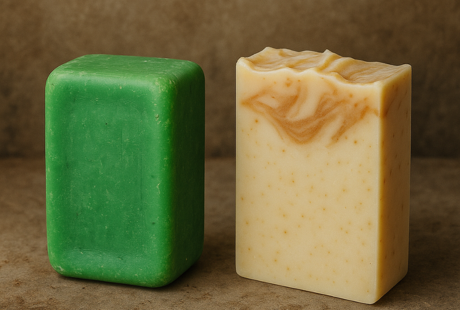
Why Real Soap Is Different from What You Buy at the Store
Soap should be simple. Fat + lye + water = clean. But somewhere along the line, soap got complicated. Bottled. Brightly colored. Over-scented. Stripped of all the good stuff and replaced with foaming agents, artificial dyes, and chemicals with names I can’t pronounce (and wouldn’t want near my kids’ skin). Honestly, commercial soap should probably come with a warning label.
Once I started learning what real soap was—and more importantly, what it wasn’t—I never looked at that store-bought bar the same way again.
What’s in Store-Bought Soap (Hint: It’s Not Really Soap)
Most commercial “soap” bars aren’t soap at all. They’re actually synthetic detergent bars—closer to laundry powder than the handmade bars you’ll find at a farmers’ market or in your own kitchen.
Here’s what they often include:
Sodium laureth sulfate (SLES): A harsh surfactant that strips natural oils.
Fragrance/perfume: A catch-all term for potentially hundreds of chemical compounds.
Artificial dyes: Often labeled FD&C colors, which can be irritating to sensitive skin.
Preservatives and fillers: To keep the bar “stable” on a shelf for years.
No glycerin: It’s stripped out (then sold separately to lotion manufacturers).
In other words—many bars are drying your skin out and irritating it, while pretending to help.
What Real Soap Looks Like
Real soap is made through a process called saponification, where oils or fats are combined with lye and water. The end result? A gentle cleanser that contains glycerin—a humectant that actually draws moisture into your skin.
When I first made soap myself, I was hooked. It smelled like real herbs, not fake perfume. It felt rich, not squeaky. And it didn’t leave my skin tight and itchy.
Real soap often includes:
Olive oil, tallow, coconut oil, shea butter (or a blend)
Goats milk, Goat’s milk is high in fatty acids and triglycerides, which help create a rich, creamy lather and deeply moisturize the skin.
Essential oils for light, natural scent
Herbs, clays, or oats for texture and healing properties
Zero junk—just ingredients your body understands
What Happened When I Switched
At first, I wasn’t sure. I missed the foam. I missed the overpowering “fresh linen” scent. But then I noticed:
My skin felt clean but never dry
I didn’t need lotion after every shower
And I actually enjoyed using something I could pronounce and trust
What I Use Now (And Why I’ll Never Go Back)
Sometimes I make my own bars. I also sometimes make soap using Castile soap as a base. Sometimes I buy from small soap makers I trust. Either way, I always choose:
Bars made with whole fats (not mystery “soap base”)
Fragrance-free or essential oil-scented
No synthetic colorants or preservatives
Hand-cut, rustic, real soap—just like folks used to make
We keep a few bars by the kitchen sink, in the shower, in travel tins.
Clean Doesn’t Have to Be Complicated
Soap isn’t just about getting rid of dirt—it’s about what stays behind. And if your soap is leaving your skin itchy, irritated, or dry… maybe it’s not really soap at all.
Want to see the real soap we keep stocked? Visit our seasonal soap selections here:
https://rockcreeksundries.com/real-soap-guide